Monday, January 10, 2011

11 Ways to be Healthier in 2011

11 Ways to be Healthier in 2011


By Nicole Gregory, Special to LifescriptPublished January 10, 2011Ready to be healthier this year – and for the rest of your life? It’s easier than you think. We have the latest research showing what to do... If you’ve made a resolution to get healthier this year, chances are you already know to eat better, exercise more and cut out bad habits.


So why aren’t you doing it? Too hard? Can’t stick with it? Luckily for you, researchers across the globe are working on ways to make that healthy lifestyle within reach. Read on for their insights and tips on making this year your healthiest ever.

1. Eat better, live longer.

A few dietary changes could reduce your risk of dying by 40%, according to a 2010 University of Maryland study.In research that examined 2,500 older adults over 10 years, those who ate the healthiest diet – with fruit, whole grains, low-fat dairy, poultry, fish and vegetables – had much higher survival rates than those who ate poorly, with high amounts of cheese and other fatty foods.How do you change your eating habits? Gradually, says senior author Nadine R. Sahyoun, Ph.D., R.D.“Replace fried foods and sweets with grilled or baked foods,” she says. “Decide which vegetables you enjoy and then look for recipes that feature them. Make sure a salad is on the dinner table every day, and add different veggies, fruits and nuts for variety and taste.”


2. Eat less, grow younger.

Exercise and cutting calories together can actually reverse some signs of aging. The combination dramatically improved mental acuity and motor skills in animal research at Harvard’s Center for Brain Science.It also seems to rejuvenate connections between nerves and muscles, according to the 2010 study, published in Proceedings of the National Academy of Sciences.Those results could translate to humans, says Derek M. Huffman, Ph.D., a researcher at the Institute of Aging Research at Albert Einstein College of Medicine in New York.“Past studies in people have shown that the combination may be beneficial,” he says.But caloric restriction doesn’t mean starving yourself, Huffman says. Just pick nutrient-dense foods.“Choose foods that make you full but don't pack many calories – like soups, salads, fresh fruits, lean chicken breast, beans, yogurt and low-calorie fiber bars,” he says.

3. Buy your way out of poor eating.

There’s a simple way to psych yourself into buying healthier foods: Pay with cash, not a credit or debit card, according to a 2010 Cornell University study published in the Journal of Consumer Research. Researchers studied 1,000 families’ grocery trips over six months and found that their carts contained more unhealthful foods when they paid with plastic. That’s because cash makes shoppers more sensitive to their purchases, the researchers say.You can also cut back on those impulsive supermarket purchases by carrying a small notebook and jotting down each junk food item you put in your cart, suggests Lifescript nutrition expert Jill Weisenberger, M.S., R.D., C.D.E. Before you check out, make sure only a small percentage of your budget is going toward snacks.

4. Play with your food.

Dozens of new mobile-device apps that aid healthy eating sprang up in 2010 – and a new study shows they really work.In a study conducted by Georgia Tech’s School of Interactive Computing, a healthy-food game was tested by 12 adults for three weeks. They began eating healthier, discussing healthy eating with friends, and making better choices when they ate out. ”Our research shows the promise of using casual mobile games to encourage adults to live healthier lifestyles,” the investigators say.
To find the best game for you, check out 14 Best Fitness Apps for Women.

5. Keep friends close.

Social relationships are so healthful that frequent interactions with friends, family and colleagues decrease your risk of dying by 50% over 7.5 years. That’s the equivalent of a smoker kicking a habit or an alcoholic giving up drinking, according to researchers at Brigham Young University in Salt Lake City who reviewed data from 148 studies.
Closeness counts too, according to psychology professor Julianne Holt-Lunstad, Ph.D., who led the research.“Having close relationships helps us cope with stress, and provides meaning and purpose to our lives,” she says. When you’re connected to a group and feel responsible for others, you’re more motivated to take care of yourself, she adds.

6. Give in to peer pressure.

When your friends have healthy habits, you probably will too, according to a 2010 Australian study of 3,610 women published in the International Journal of Behavioral Nutrition and Physical Activity.That’s not just because social support helps you eat better and get more exercise, says Kylie Ball, Ph.D., an associate professor in the School of Exercise and Nutrition Sciences at Deakin University in Victoria.“Simply observing or knowing others who engage in these behaviors increases the likelihood of doing so,” she says.

But that doesn’t mean you have to drop your coach-potato friends. Just go social with your health and fitness plan, notes Liz Neporent, coauthor of Fitness For Dummies: 4th Edition (Wiley) and senior vice president of Wellness 360, a New York-based consulting company.
“Join a walking, running or exercise group,” she suggests. “Or find a gym where you interact with others.”
Finding support on Facebook, Twitter and other social-networking sites can also be motivating, she says.

7. Catch more zzz’s.

Are you up past midnight most nights? Staying healthy – and looking young – requires an earlier bedtime.
People who sleep fewer than seven hours per night are more likely to gain excess weight, according to a 2008 study by Laval University in Canada. Plus, those who doze five hours or less don’t live as long, according to a 2010 study of 444 older women conducted by the UC-San Diego School of Medicine.

Still need more incentive to get enough shut-eye? It also makes you look better, according to a 2010 Swedish study published in the British Medical Journal. Women who were photographed after getting eight hours of sleep the previous night were rated as more attractive and healthier-looking than when they only slept five hours.Oversleeping isn’t healthy either, says psychiatrist Daniel F. Kripke, M.D., who headed the San Diego study. He suggests you aim for about 7-8 hours per night.

8. Make exercise an enjoyable habit.

People with a positive view of exercise are more physically active, according to a 2010 study at Penn State University.

Besides enjoying workouts more, they often take the stairs, not the elevator, or walk farther to a store entrance from the parking lot. Such small steps add up to a lot of activity.

“Find a strategy that reduces conscious goal-setting and monitoring,” says David Conroy, Ph.D., associate professor of kinesiology and human development at Penn State University. “If you associate exercise with drudgery, that’s what it will be,” Neporent adds.“But if associating each step with better-fitting clothes, weight loss or feeling better, then you’re on a mission to succeed.”

9. Time your workouts.

Exercising before breakfast is especially beneficial, and could even cancel out damage from less healthy habits, according to a 2010 Belgian study in The Journal of Physiology.

In that study, young men ate a high-calorie diet of 50% fat, along with a hefty, carb-rich breakfast. Some exercised intensely four times a week before breakfast, and the rest worked out at the same level after breakfast (and drank sports drinks throughout).

At the end of six weeks, those who ate breakfast before exercising had gained weight and developed symptoms of insulin resistance. But the pre-breakfast exercisers were fine.

Exercising on an empty stomach causes the body to burn a greater percentage of fat and increases levels of a muscle protein that helps transport blood sugar, the researchers note. Of course, the best time to work out is when you’ll actually do it, Neporent says.
“If it doesn’t feel good to exercise before eating, then don’t force yourself,” she advises.

10. Turn off the tube.

Watching too much TV doesn’t just kill brain cells – it could actually kill you, according to 2010 Australian research published in Circulation: Journal of the American Heart Association.

In a study of 8,800 adults, those who watched TV four hours or more per day had an 80% higher risk of cardiovascular disease, and a 46% higher risk of death, than those who watched two hours or less.

That’s because “sedentary behavior changes your metabolism – you go into ‘energy storage’ mode,” says cardiologist Donald Lloyd-Jones, M.D., chair of preventive medicine at Northwestern University Feinberg School of Medicine in Chicago.

The less you sit, the better, Lloyd-Jones notes. At the very least, get up during commercials (but don’t head to the kitchen for unhealthy snacks). Or take 5- or 10-minute exercise breaks.
“The mantra is, if you’re doing nothing, do a little,” he says. “And if you’re doing a little, do more.”

11. Stay healthy for good.

Regular physical activity, following a healthy diet and not smoking reduce the risk of developing more than 20 conditions – including cancer, heart disease, stroke, type 2 diabetes, dementia and depression – according to a 2010 review of 40 studies by University of East Anglia in England.

And a 20-year study Lloyd-Jones conducted at Northwestern found that those who follow the top five healthy habits (not smoking, little or no alcohol intake, controlling weight, getting physical activity and eating a healthy diet) maintain a low risk of cardiovascular disease as they enter middle age.

“Healthy behaviors can trump genetics,” Lloyd-Jones says. “The earlier you start making healthy choices, the more likely you are to maintain a low-risk profile.”

Are You Eating As Healthy As You Think?

Many people claim to eat healthy when they're actually doing their body a disservice with the food they consume. Take this quiz to find out if you're eating as healthy as you think.

Check out Health Bistro for more healthy food for thought. See what Lifescript editors are talking about and get the skinny on latest news. Share it with your friends (it’s free to sign up!), and bookmark it so you don’t miss a single juicy post!

Friday, January 7, 2011

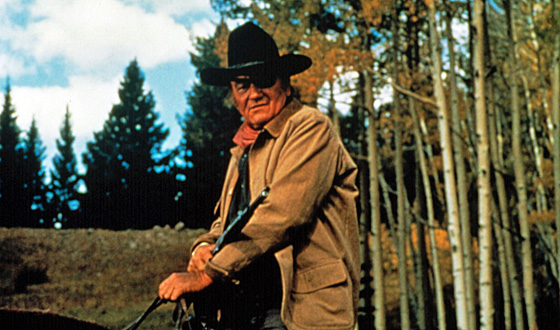
AMC's Crazy About The Duke


With his signature swagger and old school attitude, John Wayne epitomized Western machismo. His onscreen actions could serve as a user's guide for aspiring cowboys: Never let up, never back down, be honest, be fair, and fight for what's right. That much-mimicked drawl was never the main reason people were so crazy about him.

1. The Searchers (1956)

Every star needs a role that spotlights his dark side, and The Searchers did exactly that for The Duke. In this brilliant psychological portrait, Wayne took the standard Western hero (self-reliant, unyielding) and turned his positive qualities into something pathological. Wayne -- on a mission to find his kidnapped niece -- is not pleased to find the girl has gone native. Indeed, he now wants to kill her! This is Wayne at his most mesmerizing.

2. True Grit (1969)

He's drunk half the time and wears an eye patch, but that doesn't slow down crack shot Rooster Cogburn. The Duke's turn as the mercurial bounty hunter is a late-career high point, earning him his only Oscar. Here's a chance to see Wayne poking fun at his own tough-guy persona and to watch as he passes on the Western torch to then-newcomer Robert Duvall.

3. Rio Bravo (1959)

This fast-paced Western is as tight as a drum and explosive as a powder keg. The classic flick features the holy trinity of Dean Martin, Ricky Nelson, and Wayne as a ragtag group of lawmen trying to defend a town from outlaws. Aside from its star power, Rio Bravo distinguishes itself with comic relief in the form of Stumpy -- an old coot who enjoys throwing a little dynamite when the occasion calls. Howard Hawks directed Rio Bravo, and liked it so much he remade it twice (El Dorado, Rio Lobo). Both times Wayne returned for the party.

4. Stagecoach (1939)

Love must be shown to Wayne's star-making role: the misunderstood Ringo Kid whose picked up by a covered wagon filled with whores, Holy Rollers, pregnant women, and gamblers trucking through Apache territory. Stagecoach has everything people have come to expect from a Western. And no wonder: With its old-fashioned storytelling under the direction of John Ford, the movie helped make the genre legitimate.

5. Red River (1948)

Generational conflict has rarely been as raw as the battle waged here between Wayne and Montgomery Clift. The pair are very different actors: Clift is quiet and sensitive; Wayne is brusque and direct. That polarity led to explosive chemistry as their characters work out their differences -- not to mention their Oedipal conflicts -- while driving a huge run of cattle across the frontier. This ain't no City Slickers! As tensions simmer and Indians attack, Wayne delivers an anguished performance to rival any method actor.

Honorable Mentions

1. The Shootist (1976): The parallels to Wayne's own life are hard to ignore in this, his last onscreen performance, as the Duke plays a dying gunfighter who goes out with both guns blazing -- literally.

2. Fort Apache (1948): The first film in John Ford's Cavalry trilogy, it remains the best of the lot thanks to Henry Fonda and Wayne battling it out as two officers with very different styles.

3. McLintock! (1963): This light comedy has Wayne pitched in the most fearsome conflict of all: the battle of the sexes. His opponent? None other than frequent collaborator (and friend) Maureen O'Hara.

4. She Wore a Yellow Ribbon (1949): When people say "Send in the cavalry," they might as well be referring to Wayne's fearsome officer, who, despite advanced age, hasn't lost a bit of his nerve in this quiet, elegiac film.

5. The Man Who Shot Liberty Valance (1962): This swan song to the Western wouldn't be complete without Wayne's sturdy presence anchoring the movie as a rancher who leaves his own indelible mark on history.

Tuesday, October 5, 2010

GOT TO GET YOU OUT OF MY LIFE!

Paul McCartney after paying Heather Mills McCartney almost $50 million in devorce agreement.

Thursday, July 29, 2010

BEST BURGERS

Best Burgers


Burger Spot
They'll make your Harris Ranch Angus beef burger as rare or well-done as you'd like at this 5-month-old eco-friendly place in Lake Highlands. Order at the counter and they'll bring the burgers, wrapped in red-and-white-checked paper, to the table. The Classic Burger is a well-proportioned, well-seasoned, juicy one-third-pound burger on a soft bun with lettuce, tomato, mustard or mayo, pickles and onion. The half-pound Wild Bill Burger, with onions, jalapeños and tomatoes in the patty and cheddar melted on top, is the way to go if you want to spice things up. Don't miss the zingy fresh lemonade.

9090 Skillman St. at Audelia Road, Dallas. 214-221-9206.


Chip's Old Fashioned Burgers
This 28-year-old favorite offers an excellent rendition of a good old-fashioned burger. You can order the one-third-pound patty cooked the way you like, but they'll likely just chargrill it as they wish. No matter; even if your medium-rare turns out medium-well, it's juicy and good, served on a soft poppy-seed bun with a couple of lettuce leaves, slices of ripe tomato, pickles, onions, mayo and mustard. It's the kind of place that might put you in the mood for a chocolate malt. There are also beer and wine, sandwiches and Tex-Mex dishes.

4530 Lovers Lane at the Dallas North Tollway, Dallas. 214-691-2447. www.chips-burgers.com.


Farnatchi Gourmet Oven
My favorite thing at this charming little Middle Eastern-slash-pizza place is its unusual hamburger. The highly seasoned patty has chopped onions and peppers blended into the meat, and a slice of mozzarella buried in it that melts gooily as the burger's grilled. Served on a good kaiser roll spread with a harissa-flavored mayonnaise, it's loaded with lots of arugula and ripe sliced tomatoes. The burger comes with lentil soup, salad or roasted rosemary potatoes. Bring your own wine; it'll go well with this one.

3001 Knox St. at Central Expressway, Dallas. 214-219-7200. www.farnatchi.com.


Fred's Texas Cafe
In a funky place with a honky-tonk feel and a party-down patio with live music, you can get what may be the lustiest sandwich around: the Diablo burger. Super juicy, wickedly spicy, it features a thick, half-pound patty roughly formed from good meat smothered with grilled onions, a whole chipotle chile in adobo, melted Swiss cheese, lettuce, tomato, mustard and pickles. It comes with excellent hand-cut fries; Texas beers are on tap. For the fainter of palate, there's also the chipotle-free Fred burger.

915 Currie St., Fort Worth. 817-332-0083. www.fredstexascafe.com.


Maple and Motor
Jack Perkins' self-proclaimed "grease-stained tribute to low-class cool" was an instant cult hit when it opened last fall, and for good reason: Maple and Motor's burgers rock. They won't cook it to your desired temperature, but the rich patty, made from a blend of brisket and chuck, formed loosely in a ball and gently flattened on a vintage flat-top grill, has splendid flavor. It gets dressed up with traditional Texas fixings: red onions, dill pickle relish, mustard, tomato and shredded lettuce. Wash it down with a Shiner on tap or a "Jolly Rancher" iced tea. Arrive early, or prepare to wait. The place is wildly popular.

4810 Maple Ave., Dallas. 214-522-4400. www.mapleandmotor.com.


Neighborhood Services Tavern
The "cleaver and block" burger at Nick Badovinus' 4-month-old opened in March Henderson Avenue gastropub is quite simply outstanding. It's a cheffy burger, but not the overdone, froufrou kind. Instead, serious attention is paid to the meat; here it's a blend of chuck and brisket. But it's not just the patty; it's the whole package that tempts. It comes on a sesame bun dressed up with two kinds of aged cheddar, horseradish-spiked pickles and lots of caramelized onions in all the right proportions.

2405 N. Henderson Ave., Dallas. 214-827-2405.


Square Burger
On the square in McKinney, in a lovely, lofty 1929 building that was once a dry-goods store, a chef who got his chops as a sous-chef at Spago Beverly Hills is flipping some terrific burgers. Six-week-old Square Burger is a real restaurant, though the menu consists mostly of burgers, salads and sides; there's table service and a long, sleek bar that offers 30 well-chosen beers on tap (mostly North American). That burger, which is round, not square, comes on an ideal bun (a grilled Empire Bakery brioche number) with a thick pad of iceberg lettuce, a slice of tomato and circles of red onion. But this burger is all about the beef, which Genesis Beef raises locally. It's grass-fed, antibiotic- and hormone-free and dry-aged 14 to 20 days before Genesis custom-grinds it for chef Craig Brundege. He likes to cook the thick patties to at least medium, but the kitchen agreed to my medium-rare request; the burger was juicy and perfect – like the backyard burger that dreams are made of.

115 N. Kentucky St., McKinney. 972-542-0185.


12 Burgers
The atmosphere leaves a little to be desired at this gloomy fast-food spot in Far North Dallas, named for the 12 toppings on its signature burger, but the eats are excellent. The "classic" is a felicitous arrangement of a half-pound Angus patty, lettuce, tomato and Thousand Island dressing on a toasted sesame-seed bun; pickles and onions are optional (yes, you want them). Or go for the giant, sloppy 12 Burger with bacon, American cheese, sautéed onions, avocado, mushrooms, bell peppers, pickles, jalapeños, lettuce, tomato, Thousand Island and mustard.

6006 Belt Line Road, Dallas. 972-239-4194.


Wingfield's Breakfast and Burger
Last but certainly not least is Oak Cliff's monumentally juicy behemoth on a bun. It may be gigantic, but the ratios are correct: exactly the right amount of squishy bun, ripe tomato slice and lettuce to big, meaty, well-seasoned patty. The lively dose of mayo, mustard and pickles makes it quite the event. Call ahead to order and pick up, or prepare to wait. It's takeout only, so you'll have to take the booty elsewhere – ideally nearby – to dig in.

2615 S. Beckley Ave., Dallas. 214-943-5214.

Best in DFW: Burgers 2008:


Here's the list of Best Burgers in DFW as compiled by The Dallas Morning News critics in 2008.


•Angry Dog


•Fred's Texas Cafe


•Kelly's Eastside


•Love Shack


•Perry's


•Snuffer's


•Twisted Root Burger Co.


•Wingfield's Breakfast and Burger

Saturday, July 3, 2010

WORDS OF WISDOM FROM THE DUKE

Actor. Patriot. Philosopher. John Wayne didn't just know his way around a six-shooter. He was deadly with his words, too, tossing off bons mots like grenades. While not exactly an American Confucius, Wayne's nothing if not quotable and a discerning listener could live his life guided by The Duke's words of wisdom.  Without further ado, here's the best of the proverbial John Wayne.


1. "Don't apologize; it's a sign of weakness." -- She Wore a Yellow Ribbon


Rarely was the Duke's guiding ethos of manliness, self-reliance, and bravado distilled into a more perfect package than in his response to the apologies of a woman responsible for a massacre in this classic 1949 Western. Despite his aforementioned secret vulnerability, at the end of the day this is what Wayne was: stubborn, strong, and unapologetic. What's done is done. Second-guessing is for cowards, not cowboys.


2. "There's right and there's wrong. You got to do one or the other. You do the one and you're living. You do the other and you may be walking around but you're dead as a beaver hat." --The Alamo


If nothing else, The Alamo is about drawing a line in the sand by deciding which side you're on. On and off screen, Wayne saw things in black and white. Here, as Davy Crockett, he stands for democracy and sticking to your principles. A man who values security over morality is a traitor to his self. Tough tonic perhaps but also truly American.


3. "Sorry, don't get it done, Dude." -- Rio Bravo


Wayne was -- in the jargon of contemporary economics -- a results-oriented worker. Which is to say that he gets the job done. End of story. Nothing stands in his way, not even, in Rio Bravo, a gang of outlaws who have him outnumbered and outgunned. By hook or by crook, he'll do what needs doing, as he reminds drunk deputy Dude (Dean Martin) in this quotation. Even with the odds stacked against you, failure isn't an option. Well put.


4. "I never shot nobody I didn't have to." -- True Grit


In a perfect world, a gun would never be necessary but Wayne, like Arnold Schwarzenegger , knows that some problems require drastic measures. As Rooster Cogburn, Wayne has seen his share of bloodshed. That's part of his job. But even at his most brutal, Wayne also recognizes the fine line between a man and a murderer.


5. "All battles are fought by scared men who'd rather be some place else." -- In Harm's Way


The Duke is vulnerable and sensitive on occassion. That's what makes him a star. Which isn't to say that emotions ever overwhelm him or determine his fate. That soldiers get scared isn't surprising. That they still go into battle is what makes them brave.


6. Pat Wheeler: "A game-legged old man and a drunk. That's all you got?" John Wayne: "That's what I've got." -- Rio Bravo


This line is really Wayne's way of saying, "If you've got lemons, make lemonade." He sees people as his supreme resource, and he's not about to let some scoundrel put him down because one of his cohorts happens to be a drunkards. That snappy retort by the Duke is so notable that Dissent magazine did an entire article around on how it related to Wayne's vision of democracy. (For real!)


7. "Out here, due process is a bullet." -- The Green Berets


Doing right sometimes means ignoring nettlesome bureaucracy. This is one of Wayne's most infamous quotations, and it comes from one of his most misguided, reviled films, The Green Berets. The movie is a misguided call to stay the course in Vietnam, and the line brings to mind the troubling vigilantism that's central to the way Wayne and his characters see the world.


8. "There's some things a man just can't run away from." -- Stagecoach


The Duke's characters are always being pursued -- by troubled pasts and, ultimately, by death. That also goes for Wayne's own life. For decades, cancer pursued him. He beat it once, but, ultimately, the disease came back to defeat him. But he fought back against it until he couldn't fight anymore, just like Ringo Kid in Stagecoach. Wayne is about facing things with both eyes wide open and both guns blazing.


9. "We brought nothing into this world, and it's certain we can carry nothing out." --Red River


The Duke always strips life down to its essentials. In Red River, the iconic actor plays a cattle driver making due on the frontier. A true spartan individualist, Wayne's character see his life as enriched by the certainty of death. Indeed, the above statement would sit well with such esteemed existentialists as Jean-Paul Sartre and Albert Camus. Sometimes, the sentiment doesn't seem as harsh when said with a drawl.


10. "I won't be wronged. I won't be insulted. I won't be laid a hand on. I don't do these things to other people, and I require the same from them." -- The Shootist


That's the Wayne philosophy in a nutshell, and it's fitting that it comes in his last movie. Why was he like this? Was it a result of childhood beat downs after being named "Marion"? Who knows and, more importantly, who cares? In his final role, he's, appropriately, a dying gunslinger, a man at the end of his tether who still hangs onto his principles. Say what you will about the Duke and his philosophy, but he stuck by it till the end.

Saturday, May 29, 2010

10 Ways to Get to the Gym Regularly

10 Ways to Get to the Gym Regularly


Here, 10 ways to ensure you get to the gym, despite life's everyday obstacles.


Many of us begin exercise programs with the intentions of making fitness a habit. Unfortunately, hitting the gym after a long, hard day can quickly become our biggest obstacle.


Here 10 ways to get you in the door:


Pencil a gym trip on your calendar like you would other can't-miss events. This way, you're emphasizing the priority of fitness in your crowded life by consciously making time to exercise.


Set realistic goals to keep discouragement at bay. Is it realistic to become a marathon runner? Focus on what you want to get out of your exercise routine.


Know what you're going to do once you get to the gym. Plan ahead so that you know exactly what the trip to the gym will entail. Perhaps it's an hour of strength training or an intense spin class. Make a plan, and stick to it.


Have a backup plan. Something may happen that will keep you from going to the gym, but you can still work out at home with weights or cardio activities.


Gain support from your family. Let them know it's all about your health. Buddy up with a friend as a way to keep you motivated.


Record your favorite upbeat, motivating tunes so you can listen to them while exercising. Leave out all the sad, slow songs about lost loves. What you need are tunes to keep you going.


Start with your least favorite exercises at the beginning of your workout. You can look forward to your favorites at the end.


Remember the other reasons why you're working out, other than just toning up. You'll help reduce your risks for heart attack, stroke, and other cardiovascular conditions; build strong bones; lower your cholesterol; have more energy; feel proud of yourself.


Get assistance from the trained staff at your fitness center- or hire a personal trainer. They can help you use proper procedures to avoid injuries and frustration, and tailor a fitness program for you. Besides the bucks you're paying, the trainer will motivate you to get to the gym.


Reward yourself when you reach a goal. Treat yourself to that new dress you've admired in the window of a department store, or that massage you've always wanted.


c

Friday, April 23, 2010

Report says health care will cover more, cost more

Report says health care will cover more, cost more


Apr 23 04:01 AM US/Eastern


By RICARDO ALONSO-ZALDIVAR


Associated Press Writer


WASHINGTON (AP) - President Barack Obama's health care overhaul law is getting a mixed verdict in the first comprehensive look by neutral experts: More Americans will be covered, but costs are also going up.


Economic experts at the Health and Human Services Department concluded in a report issued Thursday that the health care remake will achieve Obama's aim of expanding health insurance—adding 34 million to the coverage rolls.


But the analysis also found that the law falls short of the president's twin goal of controlling runaway costs, raising projected spending by about 1 percent over 10 years. That increase could get bigger, since Medicare cuts in the law may be unrealistic and unsustainable, the report warned.

It's a worrisome assessment for Democrats.

In particular, concerns about Medicare could become a major political liability in the midterm elections. The report projected that Medicare cuts could drive about 15 percent of hospitals and other institutional providers into the red, "possibly jeopardizing access" to care for seniors.


The report from Medicare's Office of the Actuary carried a disclaimer saying it does not represent the official position of the Obama administration. White House officials have repeatedly complained that such analyses have been too pessimistic and lowball the law's potential to achieve savings.


The report acknowledged that some of the cost-control measures in the bill—Medicare cuts, a tax on high-cost insurance and a commission to seek ongoing Medicare savings—could help reduce the rate of cost increases beyond 2020. But it held out little hope for progress in the first decade.


"During 2010-2019, however, these effects would be outweighed by the increased costs associated with the expansions of health insurance coverage," wrote Richard S. Foster, Medicare's chief actuary. "Also, the longer-term viability of the Medicare ... reductions is doubtful." Foster's office is responsible for long-range costs estimates.

Republicans said the findings validate their concerns about Obama's 10-year, nearly $1 trillion plan to remake the nation's health care system.

"A trillion dollars gets spent, and it's no surprise—health care costs are going to go up," said Rep. Dave Camp, R-Mich., a leading Republican on health care issues. Camp added that he's concerned the Medicare cuts will undermine care for seniors.

In a statement, HHS Secretary Kathleen Sebelius sought to highlight some positive findings for seniors. For example, the report concluded that Medicare monthly premiums would be lower than otherwise expected, due to the spending reductions.

"The Affordable Care Act will improve the health care system for all Americans, and we will continue our work to quickly and carefully implement the new law," the statement said.

Passed by a divided Congress after a year of bitter partisan debate, the law would create new health insurance markets for individuals and small businesses. Starting in 2014, most Americans would be required to carry health insurance except in cases of financial hardship. Tax credits would help many middle-class households pay their premiums, while Medicaid would pick up more low-income people. Insurers would be required to accept all applicants, regardless of their health.


The U.S. spends $2.5 trillion a year on health care, far more per person than any other developed nation, and for results that aren't clearly better when compared to more frugal countries. At the outset of the health care debate last year, Obama held out the hope that by bending the cost curve down, the U.S. could cover all its citizens for about what the nation would spend absent any changes.

The report found that the president's law missed the mark, although not by much. The overhaul will increase national health care spending by $311 billion from 2010-2019, or nine-tenths of 1 percent. To put that in perspective, total health care spending during the decade is estimated to surpass $35 trillion.

Administration officials argue the increase is a bargain price for guaranteeing coverage to 95 percent of Americans. They also point out that the law will decrease the federal deficit by $143 billion over the 10-year period.


The report's most sober assessments concerned Medicare.

In addition to flagging provider cuts as potentially unsustainable, the report projected that reductions in payments to private Medicare Advantage plans would trigger an exodus from the popular alternative. Enrollment would plummet by about 50 percent. Seniors leaving the private plans would still have health insurance under traditional Medicare, but many might face higher out-of-pocket costs.


In another flashing yellow light, the report warned that a new voluntary long-term care insurance program created under the law faces "a very serious risk" of insolvency.

Copyright 2010 The Associated Press. All rights reserved. This material may not be published, broadcast, rewritten or redistributed.

First black priesthood holder recalls historic day

First black priesthood holder recalls historic day


By Chris Peterson


Mormon Times


Published: 2010-04-23 00:16:29

Joseph Freeman's friend wondered what was wrong. He noticed that Freeman was visibly concerned -- a mystery since the man who is usually smiling had just received historic news that would positively change his and many others' lives.


Freeman -- who would become the first Mormon of black African descent to receive the Melchizedek Priesthood in the LDS Church after the 1978 priesthood revelation -- was asked by his friend what his worry was. "This means I have to go home teaching now," Freeman joked.


Freeman, 58, recently spoke of his conversion and his groundbreaking experience.


Long before the LDS Church appeared on his radar, Freeman was a devoted religious person. At 10 years old, he was baptized as a member of the Holiness Church.

Furthermore, it was his dream to become a lay minister in the faith, something he accomplished after earning an evangelist's license.

When The Church of Jesus Christ of Latter-day Saints was introduced into his life, it was his future wife, Toe Isapela Leituala, who presented it. Freeman -- who was a 19-year-old Army enlistee stationed in Hawaii -- said that Leituala, a Samoan convert of six years, made an impactful impression on him.


As she explained the Word of Wisdom to Freeman, he realized he was already living some of it. "I didn't take drugs or drink alcohol, but I did like to drink tea and have a cup of coffee once in a while," he said. "But I thought, that if she can live closer to God by not partaking of those things, I decided that I can do that, too."


Freeman said that he was impressed with everyone he met in the Mormon faith, including Leituala's father, with whom he had lengthy talks. "You hit a barrel and it's hollow," Freeman said. "But with these Mormons," he reflected, "the barrel was full -- full of love."


Freeman decided to abandon his evangelist's license, and upon fully being aware that he could not receive the priesthood, Freeman was baptized and confirmed a member of the LDS Church on Sept. 30, 1973.


In 1974, Freeman and Leituala were married, and a year later, Freeman left the military and he and his wife eventually moved to Salt Lake City.


The First Presidency of the LDS Church announced on June 8, 1978, that President Spencer W. Kimball had received a revelation that said, in part,"every faithful, worthy man in the church may receive the holy priesthood ... and enjoy with his loved ones every blessing that flows therefrom, including the blessings of the temple ... without regard for race or color."


Usually, those ordained to the office of a priest in the Aaronic Priesthood must wait about a year before being ordained to the office of an elder. But church leaders felt that Freeman's faithfulness to the gospel and his spiritual aptitude warranted his being elevated to an elder immediately.


Freeman was given the Melchizedek Priesthood three days after President Kimball received the revelation.


Freeman accepted the news that he was originally given: that he would have to wait a period of three to six months before he would be able to enter the temple, receive those blessings and be sealed to his family.


But church leaders again felt differently and ultimately Freeman was able to attend the Salt Lake Temple with his family, becoming one of the first men of black African descent to receive those ordinances. President Thomas S. Monson, who at the time was a member of the Quorum of the Twelve, officiated at the ceremony.


Freeman credits divine intervention in the cases of priesthood leaders reconsidering by letting him receive the Melchizedek Priesthood and being able to attend the temple earlier.


"Those leaders had one thing in their minds, but God changed their minds," Freeman said. "God can micromanage our hearts and souls."


E-mail: cpeterson@desnews.com


MormonTimes.com is produced by the Deseret News in Salt Lake City, Utah.


It is not an official publication of The Church of Jesus Christ of Latter-day Saints.

Wednesday, April 21, 2010

HOW TO FIGHT THE IRS

APRIL 12, 2010 How to Fight the IRS


Brace yourself: The chances of being audited are rising. So if it happens to you, here's what to do—and what not to do.

By TOM HERMAN


Get ready for increased scrutiny by the Internal Revenue Service.


With Washington searching for ways to cut the budget deficit, IRS officials face intense pressure to collect more revenue. The agency plans more audits, especially of taxpayers in high brackets or those who are self-employed and deal in large amounts of cash. The IRS also has turned up the heat in such areas as offshore tax evasion, including undisclosed foreign bank accounts.


More Americans may be audited by the IRS this year, thanks to new pressure on the agency to collect from laggard taxpayers. The Wall Street Journal's former tax columnist Tom Herman explains to Kelsey Hubbard some smart -- and not-so-smart -- ways to fight back.


If you become an IRS target, what should you do?


For many people, the answer may seem simple: Surrender as quickly as possible, no matter how good a case you have.

Even if you are sure you are right and have all the records to prove it, fighting the IRS, one of the most powerful government bureaucracies on the planet, can be the ultimate nightmare. Seemingly routine struggles can drag on for years, leading to endless frustration and sleepless nights. Even those who eventually triumph may wonder if the fight was worth all the time, effort and expense.

But if you're ready for the challenge, there are many smart ways to fight back—and win. Start by keeping comprehensive, well-organized documents. Always scour the IRS's claims for mistakes. Don't get discouraged when dealing with tax officials. If you are convinced you are correct, consider pushing your case up the chain of command. Try the IRS appeals division. You may also get valuable help from the IRS's taxpayer advocate service. Or go to court.

At the same time, there are some classically dumb mistakes to avoid—everything from simply ignoring the IRS to arguing that it somehow is voluntary to pay federal income tax.

Here are some combat tips from lawyers, accountants and "enrolled agents," who are federally licensed tax experts authorized to represent taxpayers at all levels of the IRS.

Hire the wrong tax preparer: Beware of someone who asks you to sign a blank tax return. Or whose fee is based on a percentage of how much you save in taxes. Or who promises to get you a significantly higher refund than anyone else can. People like these are likely to prepare outrageous returns that will land you in deep trouble with the IRS.

The Ostrich approach: One of the biggest mistakes is to bury your head in the sand and ignore IRS notices and letters, hoping the tax collectors eventually will lose interest and go away. "When dealing with the IRS, the best thing someone can do is to maintain regular communication," says Charles P. Rettig, a tax lawyer at Hochman, Salkin, Rettig, Toscher & Perez P.C., in Beverly Hills, Calif. "Whether during an audit or in the tax-collection process, ignoring the IRS is simply a bad idea."


Act professionally throughout the process and reply to IRS correspondence on time. The IRS is very serious about deadlines. Also, "keep a record of all communications and correspondence with the IRS, including proof of delivery, and keep your records organized," says Caroline D. Ciraolo, a tax lawyer at Rosenberg Martin Greenberg LLP in Baltimore.

Frivolity: Some people tell the IRS and judges that it somehow is voluntary to file a federal income-tax return and pay taxes. Or that their wages, tips and other income for personal services aren't taxable. Or that they are residents of a state but not of the United States. Or variations of these themes.


Don't even think of making any of those claims. Tax Court judges routinely label these as "frivolous" arguments, delaying tactics or both. More important, judges often impose stiff monetary penalties on those foolish enough to persist.
Ross MacDonald


Bribery: This is even dumber—and far more dangerous—than frivolity. In a case last year, for instance, a Houston-area resident was sentenced to prison for two years for trying to bribe an IRS agent, according to a report by the Treasury Inspector General for Tax Administration. The U.S. Attorney's office in the southern district of Texas said the man offered the agent $2,500 to reduce his tax liability to around $500 from $49,000. In addition, the man "repeatedly offered the agent pizza from his restaurant as part of the deal."

Automatic Surrender: Just because the IRS says you owe money doesn't mean that's correct. The agency makes mistakes—plenty of them, even in computing penalties and interest. "I have had several clients receive notices regarding unreported securities sales," says Stephen W. DeFilippis, the owner of West Suburban Income Tax Service in Wheaton, Ill., and an enrolled agent. "In these cases, the clients exchanged mutual funds one for another and didn't realize that's a taxable event." The IRS, he says, sent a notice "including the gross proceeds in income and assessing tax on the additional income."

But the IRS missed a vital point, he says: "The clients brought me these notices, and in each case the mutual-fund exchanges resulted in a loss. So instead of owing a large sum to the IRS, the clients got a refund."

This story shows how foolish it can be to pay what the IRS says you owe without "thoroughly investigating" the subject, says Mr. DeFilippis.


But if the amount in question is relatively small and the issue is confusing, some may conclude it isn't worth the time, trouble and expense of challenging the IRS and may decide to pay in order to make the problem disappear. It depends on the details of each case, including how confident you are of victory and how much time and expense you are willing to devote to the battle.


Smart Moves


GET HELP: Having a smart, well-prepared tax expert on your side can be a tremendous advantage. Not only will they know the ins and outs of the tax code, but also they can take over the often-exhausting job of dealing with the IRS —and help you decide how far to push a fight.

Take the case of Elizabeth Chapman, a 66-year-old poet and writing consultant in northern California. Nearly three years ago, the IRS notified Ms. Chapman that her 2005 federal income-tax return was to be examined. Fortunately, Ms. Chapman had chosen an experienced and highly regarded tax professional, Claudia Hill, an enrolled agent and the owner of a tax-preparation and advisory firm in Cupertino, Calif.

Ms. Hill arranged a meeting with the IRS so that she could present evidence on behalf of Ms. Chapman. Even before that meeting, Ms. Chapman received a note from the IRS saying its calculations showed she owed more than $15,900, Ms. Hill says.

Ms. Hill finally met with the IRS, laid out Ms. Chapman's case, and later sent more material by mail. The IRS eventually responded with a letter saying its new calculations showed Ms. Chapman owed only $151. But Ms. Hill felt confident the correct answer was zero. She asked the IRS agent's manager to intervene—"but to no avail," she says.


Ms. Hill didn't give up. Eventually, an IRS appeals officer concluded Ms. Chapman didn't owe a penny.


Ms. Chapman won another battle in U.S. Tax Court. After hearing about the difficulties she had encountered, the judge ordered the IRS to pay $3,475.06 in fees that Ms. Chapman had incurred. In his opinion, handed down last October, the judge concluded that the IRS had "presented no evidence showing it was reasonable to determine" that Ms. Chapman owed anything. (An IRS spokesman declined comment on Ms. Chapman's case.)

The IRS check finally arrived in March of this year, Ms. Hill says. She says Ms. Chapman "is amazed," adding: "I'm pleased."


Become a Pack rat: Generally, you should keep returns and all supporting documents for at least three years from the original due date, including extensions. Even better, save all records for at least six or seven years. The reason: If you didn't report income that should have been reported, and if it is more than 25% of the income shown on the return, the time period doesn't run out until six years after the return was filed, according to an IRS publication.


But be warned that there is no time limit on the IRS if someone hasn't filed a return, or files a return that is "false" or "fraudulent with intent to evade tax." You should save some records even longer. For example, keep indefinitely documents showing what you paid for investments that you own and haven't yet sold—such as stocks, bonds, mutual funds, art objects or a home, including improvements.


It may be a nuisance, but all that paper could be vitally important if you are challenged by the IRS. The more complete and well-organized your record keeping, the better your chances of prevailing. The case of Ms. Chapman illustrates this lesson. Judge Gerber of the U.S. Tax Court wrote that Ms. Chapman had given the IRS "documentation that reflected that she was entitled to deductions in an amount that was in excess of the amount respondent questioned."


Appeal: If you feel you have a bulletproof case but are getting nowhere with an auditor, stay calm—and consider asking to speak to that person's manager. If that doesn't help either, consider taking your case to an IRS appeals office. An IRS publication says "most differences" between taxpayers and the IRS that reach the appeals level are settled. For details, see IRS Publication 556.

TRY THE ADVOCATE: You may also consider taking your case to the IRS Taxpayer Advocate Service, or TAS, an organization within the IRS created to help taxpayers resolve problems, as well as advocate for changes in the system.

You may be eligible for help if you have tried to resolve your tax problems through normal IRS channels and haven't gotten anywhere, or if you believe an IRS procedure isn't working as it should, such as an amended return that hasn't been processed, an advocate spokesman says.

The service also may be able to help taxpayers whose problems are causing financial woes or significant cost, including the expense of hiring a pro to represent them. Among the classic types of cases accepted by the TAS are those in which a taxpayer is experiencing, or is about to experience, a financial hardship due to an IRS action, such as a lien, levy or seizure, or some IRS inaction, such as a delayed or lost refund check, a spokesman says. For details, see the IRS Web site (www.irs.gov/advocate) and IRS Publication 1546, or call 877-777-4778.

Partial Pay: If you can't pay everything you agree that you owe, consider arranging to pay through an installment plan. Try the online payment agreement option on the IRS Web site to see whether you qualify.


If you are facing a financial crisis and have no hope of repaying everything you owe, consider asking the IRS to settle for some lesser amount. Getting the IRS to agree to an "offer in compromise" usually is difficult. But the IRS recently announced "new flexibility" in considering offers from taxpayers facing "economic troubles, including the recently unemployed."

Specifically, IRS employees "will be permitted to consider a taxpayer's current income and potential for future income when negotiating an offer in compromise," the IRS said. "Normally, the standard practice is to judge an offer amount on a taxpayer's earnings in prior years." However, the IRS said it may also require the taxpayer to agree to pay more "if the taxpayer's financial situation improves significantly."

More broadly, an IRS spokesman says the agency is "continually working to reduce taxpayer burden by seeing to it that tax issues are resolved in the least costly and most expeditious manner possible."

He points out that the IRS earlier this year "began rolling out a series of streamlined and simplified notices, designed to reduce the potential for confusion."


GO TO COURT: Most people who decide to slug it out with the IRS in court do so by filing a petition with the U.S. Tax Court, which is based in Washington, D.C., but holds trials in many cities around the nation. If you pick this court, you usually don't need to pay the amount in dispute while your case is pending there, according to the court's Web site (www.ustaxcourt.gov). That site has details on how to get your day in Tax Court, what types of cases the court accepts and answers to other frequently asked questions.


"In many cities, there are low-income-taxpayer clinics that will offer free representation in tax disputes," says Ms. Ciraolo of Rosenberg Martin Greenberg. "Also check to see if there is a U.S. Tax Court pro bono program" in your area.


If the Tax Court decides you do owe some tax, or if you settle or agree to some tax liability, the law generally says interest runs on unpaid tax from the date it was originally due until paid in full, the court says. "Interest also runs on some penalties."


But the Tax Court isn't your only option. Instead, you could choose to go to federal district court or the U.S. Court of Federal Claims. Generally, though, those courts will hear tax cases only after you have paid the contested amount and filed a refund claim with the IRS. See IRS Publication 5.


Picking the right court can be tricky. The answer will depend on the intricacies of your dispute and other factors, such as prior decisions made by those courts on the issues in your case.


Lobby Congress: This is a very long shot. But occasionally, someone comes up with a compelling story that attracts press coverage and leads to tax-law changes. During the 1990s, Congress approved changes in the "innocent-spouse law" after lawmakers were moved by the plight of numerous divorced or separated couples who had filed joint returns and where one, usually the woman, later argued she was being saddled with taxes that rightly should be paid by the other person. The changes were designed to make it easier, in certain circumstances, for one spouse to be relieved of the liability.


Mr. Herman, a former Wall Street Journal tax columnist, is a writer in New York. He can be reached at reports@wsj.com.


Copyright 2009 Dow Jones & Company, Inc. All Rights Reserved

Saturday, April 10, 2010

Thursday, April 8, 2010

Should the Beatles have worked it out?

Should the Beatles have worked it out?


40 years after the split, experts say it was time to let it be


By Tony Scalfani


msnbc.com contributor


updated 2:37 p.m. CT, Wed., April 7, 2010


Seven years and seven months. That’s how long the world officially knew the Beatles as a recording act, spanning from the date they released their first single in England to the day their breakup was announced on April 10, 1970.


Looking back after 40 years, that seems like a ridiculously short lifespan for such an important band. The time frame seems ever tinier considering the longevity of other popular bands of their era, like the Rolling Stones, the Who and the Kinks, or bands that came later, like Bon Jovi and U2.

Did the Fab Four call it quits too soon? The answer might seem to be yes, considering interest in the band never really faded. Sales were massive for both the “Anthology” series from the mid-1990s and last year’s CD remasters. Rolling Stone reported in December the surprising fact that the Beatles had the biggest selling album of the last decade with “1,” and that they were second only to Eminem as the top selling artists of the decade.


In 1983, Keith Richards told Musician magazine there “was no need” for the Beatles to have broken up and that the band “could’ve taken a couple of years off, resolved their problems and still carried on.” But as tantalizing as that “what if” scenario might seem to fans, there was little chance the band could have worked as a unit any longer, said eight authors of Beatle books (three of whom knew the band). In both the personal and artistic realms, these writers said, it was time for each band member to let things be.


By summer 1969, when the Beatles recorded their final album, “Abbey Road,” the musicians were already feeling they’d long realized any collective artistic aspirations, said Ken Mansfield, the former U.S. manager of the Beatles’ label Apple and author of “The White Book: The Beatles, the Bands, the Biz: An Insider's Look at an Era.”


‘No place to go’


“There’s one subtlety that people don’t realize, and we discussed this one time at a meeting in a Hyde Park hotel: they had no place to go,” Mansfield said. “They couldn’t be more No. 1 — they couldn’t be bigger. They had the wealth, they had the success, they had all the things that would be goals for a rock band. That was one of the reasons we did Apple Records. It gave them something new to do.”

The decision to stop touring in 1966 deprived them of the normal performer-audience dynamic that keeps bands energized, said Chris O’Dell, a former Apple Records employee who penned the tome “Miss O’Dell: My Hard Days And Long Nights With The Beatles, the Stones, Bob Dylan, Eric Clapton And the Women They Loved.”


“As a live band on tour, they had nothing to shoot for,” she said. “They couldn’t hear themselves. It wasn’t fun for them. George (Harrison) once told me the best fun he ever had in the Beatles was in Hamburg, Germany — that was like really touring and really being out there, but that didn’t happen for them afterwards.”


Because the Beatles in their early days were united like few other bands, they were able to weather troubles that might have destroyed other acts, Mansfield said. But by 1969, that unity was coming undone. Paul McCartney disagreed with the other three members about who should manage the group, John Lennon was more interested in working with new wife Yoko Ono, and Harrison was disgruntled at not getting more songs on the albums.

Bob Spitz, author of the New York Times best seller “The Beatles: The Biography,” said these disagreements alone would have kept them from sticking around much longer, much less releasing another record up to the high standard of “Abbey Road.”

“It wasn’t likely, based on their emotions at the time, that we were going to get fabulous material as a group from them,” Spitz said. “Emotionally they weren’t in any shape to be the Beatles anymore. They didn’t like each other. When the Beatles got together they were young guys. By the time they put out ‘Abbey Road,’ their relationships had no bearing on each other as a group anymore.”

OK, but then how did the band exit on such a high note if they were in such awful shape? Well, to pinch a phrase from the Fabs, they knew it was getting very near the end. So said Peter Doggett, the author of “Abbey Road/Let It Be: The Beatles” and the forthcoming “You Never Give Me Your Money: The Battle for the Soul of the Beatles.”


“I think in their hearts they all knew it was the last record, so they could all say ‘OK, I’m gonna be on my best behavior for a few weeks and then we’ll get this over,’” Doggett said. “If they had to think, ‘We’re gonna do this one, and then another one in seven months’ time,’ I don’t think they would actually have managed to work together with that close knit internal harmony.”

Tim Riley, author of “Tell Me Why: A Beatles Commentary,” echoed this sentiment and said that during the 1960s, the Beatles “were all still really in thrall to their collective muse and that muse carried them through ruptures and conflicts.”

Riley said the band’s breakup came about at the right time: “It’s one of the key aspects of their story that they actually found a way to stay together those last couple of years and turn out a lot of great material. But it’s really in spite of the very stark internal conflicts that kept arising again and again.”

The roots of Harrison’s discontent ran deep, said Bill Harry, who founded Liverpool’s Mersey Beat magazine and was a friend of Lennon and original member Stu Sutcliffe. Although Lennon and McCartney became the band’s main songwriters, Harrison, said Harry, was the first Beatle mentioned in Mersey Beat as having had an original song recorded, the instrumental “Cry for a Shadow” (later co-credited with Lennon).

“(Then) when it started with the big Lennon and McCartney thing, and it was hit after hit, I used to see George and (ask) ‘Why aren’t you writing the music?’” Harry said. “I think the Lennon and McCartney thing was too much for him to sort of handle.”

Harry, who has written 24 books on the Beatles, said that fact alone assured a limited shelf life of the band: “Everyone thinks it would be nice if the Beatles could have had another five years, but they couldn’t. The time was over.”


One more album?


But what if the Fab Four had come together for one more album? This question was posited by David Furst, a producer at Washington DC’s WAMU-FM for a program in which music writer Richie Unterberger took part. Unterberger, who penned the book “The Unreleased Beatles: Music and Film,” said fans shouldn’t look to the early Beatles’ solo albums to imagine what a group effort might have sounded like.


“A really challenging aspect of trying to predict what would have happened is that the songwriting would have inevitably changed if all four of them had been together,” he said. “Part of what made the Beatles so special is they had this synergy where they create more than they can do on their own.”


Unterberger said it was fortunate the Beatles’ albums never ended up deteriorating in quality, like those of bands that had more longevity. “They went out with a great record, and most importantly, a record on which the sense of group unity is still really strong,” he said.


Steve Turner, author of “A Hard Day's Write: The Stories Behind Every Beatles Song,” agreed: “You can look at some of the songs they wrote during the Beatles that got left over and put on solo albums — but whether you put all those together and it would have made a follow up to ‘Abbey Road,’ I don’t know. They seemed to have reached their limit.


“I can’t think of anything that they did better in subsequent years individually,” Turner said. “I can’t think of a particular kind of studio development or technical development where you’d think, ‘Gosh if only they’d pursued that.’”


© 2010 msnbc.com. Reprints


URL: http://www.msnbc.msn.com/id/36180025/ns/entertainment-music/page/2/

Saturday, April 3, 2010

GO TO HELL

Elder J. Golden Kimball was in reality just a cowboy in a suit with a calling to serve the Lord and the people of the Church. He was himself and tried the best he knew how---and the people loved him for it.


He had a special connection with the youth of the Church---sort of. While they knew he had "imperfections" he was still a General Authority and often shared his testimony of the gospel with them. He also knew how to put them in their place when they needed it. And they respected him for it.

The story is told of a stake president in Wyoming who wrote Salt Lake for help with his youth. The young men were going around with pistols in their hip pockets and shooting them off after basketball games and dances. There was going to be a killing if somebody didn't talk them into changing their cowboy ways.

So President Heber J. Grant called J. Golden into his office and said, "This sounds like an assignment for you, Brother Kimball."


J. Golden protested, "Why me?"

President Grant said, "Well, you're the only cowboy that's a General Authority. They'll listen to you!"

So J. Golden went to Wyoming. He wrote the stake president and asked him to gather all the youth into the largest hall they had. The stake president was happy to oblige. When the time came, they were all there. The doors were even locked so the youth couldn't get out.


The troublemakers were yahooing, firing off pistols and throwing paper airplanes and showing no respect for Brother Kimball when he arrived. J. Golden took all this in and thought the direct approach best.

"Go to Hell!" he said.

The auditorium suddenly became still.

He said it again, "Go to Hell!"


You could hear a pin drop. All eyes were riveted on the angry scarecrow at the podium. Having grabbed their attention, J. Golden forged ahead. "That's where you're all going to go if you don't change your ways! I hear some of you have been walking around town with pistols in your hip pockets. Better be careful---might go off and blow your brains out!"

And he walked out of the hall. The roughnecks were left with their mouths hanging open.

Later, the stake president wrote to say the rowdies were better behaved after learning where their seat of reason was. (J. Golden Kimball Stories, p. 30-31).


When it comes to youth, sometimes it is better to be honest and straight with them. They more often than not will respect you for it----they did J. Golden Kimball.

Tuesday, March 30, 2010

The Cities That Will Bring You Down

The Cities That Will Bring You Down


If you’re thinking of moving, these cities might not be the best for your mood.


Most depressed, saddest, or worst city in the country-labels that any city hardly covets; however, each year, numerous surveys and studies cast an unwanted spotlight on cities with the worst standards of living.


Depending on which data you rely on and the focus of the reporting agency, the cities may vary. For instance, the U.S. Centers for Disease Control and Prevention and their Behavioral Risk Factor Surveillance System will reveal different information to FBI crime reports, air quality and housing reports, or data from the U.S. Census Bureau.


Even the most comprehensive reports have their critics, largely due to how the raw data is used or interpreted by the media. Regardless, due to their poor ranking on factors including economic indicators, crime and health statistics, and other quality of life indicators such as suicide rates and pollution, several cities stand out


As the country slides into a recession described as the worst since the Great Depression, and thousands more people stand to lose their jobs, there's another index that plays a role: the Misery Index. Created by economist Arthur Okun, this economic indicator adds the inflation rate to the unemployment rate. The theory is that the two combined creates profound economic and social costs for a country.


So how does a city qualify as depressing? Well, first, we considered the National Institute of Mental Health's stated environmental causes of depression. They include trauma, loss of a loved one, a difficult relationship, or any stressful situation-this could include financial problems, poor health, natural disasters, unemployment, or being the victim of a crime.


For this list of most depressing cities we used data from several sources, including the CDC, the U.S. Census Bureau, state and federal crime statistics, and the Misery Index. It also weighs information from Bert Sperling, an authority on city rankings and founder of Sperling's Best Places. His research includes crime statistics, health patterns and trends, and several other factors. (The cities here appear in no particular order.)


St. Louis, MO


The mid-west city ranks poorly on several indicators. According to the U.S. Census Bureau, among large cities it ranks in the top six for poverty. It also has one of the highest crime rates and has been labeled one of the 10 most dangerous cities to live in.


New Orleans


Still recovering from the aftermath of Katrina, the Big Easy has a high violent crime and unemployment rates, and significant numbers of suicides and divorces. On Sperling's list it ranks as the third most stressful city to live in. Also, in the first comprehensive national health survey of major American cities conducted by Centrum, New Orleans was ranked America's most unhealthy city.


Detroit


The motor city follows behind St. Louis as the second most dangerous city to live. Suffering economically from the decline of the auto industry, the city has the second highest unemployment rate in the country, subsequently, high levels of poverty. It also ranks in the top five for fattest cities, with 62 per cent of the population overweight or obese.


Flint, MI


Flint's economy has been crushed by the failed auto industry. With soaring unemployment and crime rates this city is the second poorest in the country. Along with cancer and cardiac death rates higher than any other other region in the U.S., it also has one of the highest smoking rates and scores poorly on the air quality index.


Cleveland


While this city ranks relatively well in some health categories - such as low hypertension and arthritis rates - it doesn't measure up in other categories. Clevelanders have some of the worst BMI scores compared to the general population, and it is the poorest city in the country. Its crime rate is also higher than the national average.


Stockton, CA


Stockton is reeling from the housing crash and has one of the highest foreclosure rates in the country. It also has the highest violent crime rates in the state of California, which some criminologists link to the high level of unemployment and drug use, and large number of gangs.


Philadelphia


The City of Brotherly love's crime rate is at its highest in over 20 years. Officials cite factors such as one of the highest levels of poverty in the country and the overwhelming amount of illegal weapons. The city is also plagued by several toxic waste sites. In the American Lung Association's State of the Air report it came in at 13th spot for the worst ozone pollution in major cities.


Los Angeles


Not surprisingly L.A. pulled in top spot as the metro area with the worst year-round ozone pollution, and particle pollution, or soot. Residents also endure one the worst commute times in the country, high taxes, and Superfund sites, which are the country's most toxic waste sites. On a high note, the city's crime rate continues to decline.


New York


The good news is the Big Apple is one of the safest large cities to live in. The bad news is that it's one of the most expensive cities to live in and ranked fourth on the Misery Index. Housing costs are exorbitant, income taxes are higher than the national average, and it has one of the worst commuting times in the country.


Las Vegas


The gambling mecca has been one of the cities hardest hit by the housing crash. Home prices have fallen by 52 per cent. Tourism has dropped dramatically, with the airport suffering its biggest passenger decline since the early 80s. It ranks number four on Sperling's list of most stressful cities to live, has one of the highest suicide rates in the country, high alcohol consumption levels, and poor physical activity levels.


Copyright © 2009 QualityHealh.com. All rights reserved.